

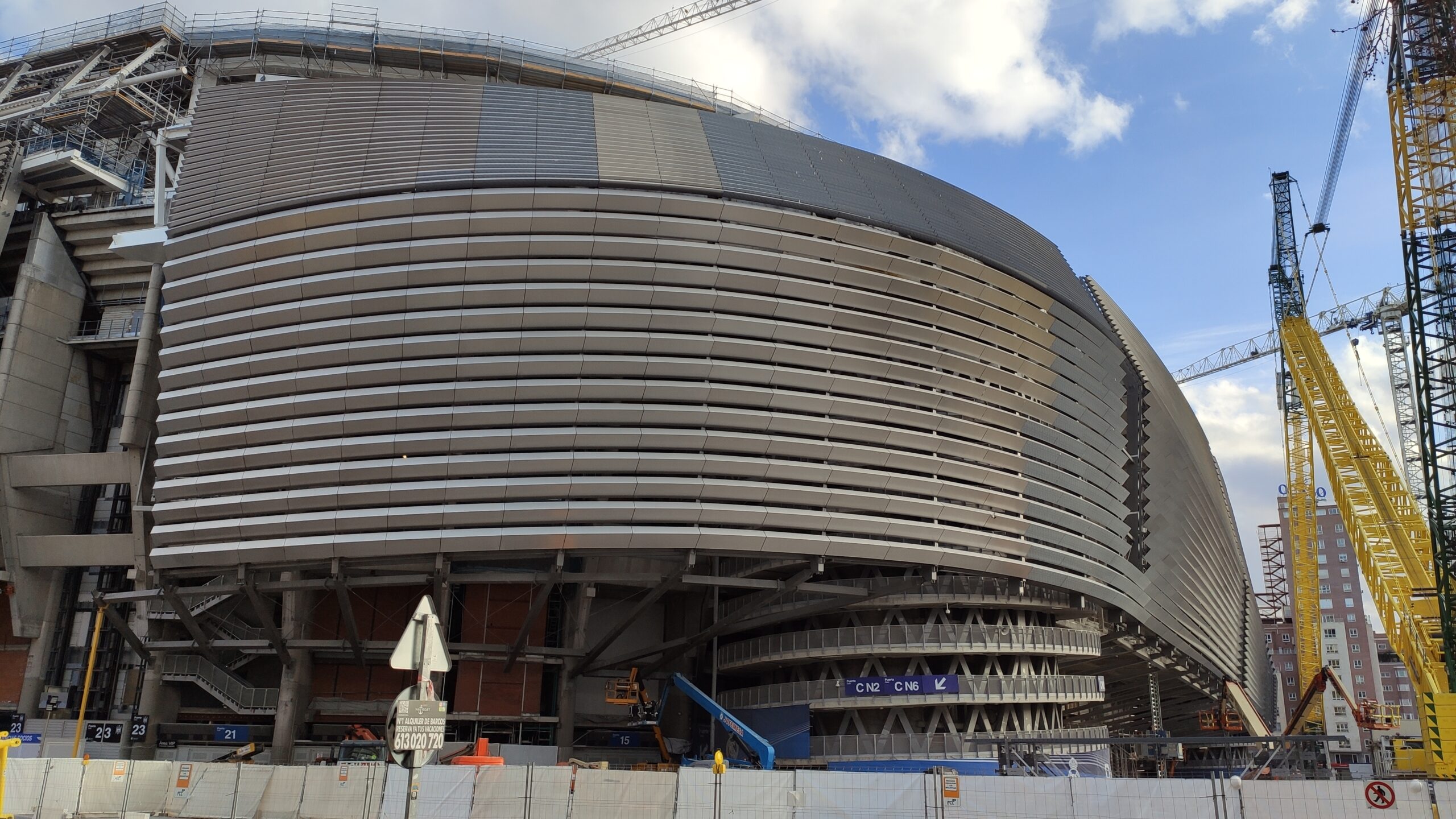
Santiago Bernabéu Stadium is the home of Real Madrid, one of the most magnificent and advanced sports venues in the entire world, and an absolute must-visit destination for every Israeli football fan who wants to experience European football at the highest level. With the completion of the historic renovation project in 2024-2025 at an estimated cost of more than €2 billion, the stadium underwent a complete transformation and turned from a respected sports facility into a leisure and culture complex from the future. The new Bernabéu includes an impressive retractable roof, a retractable grass pitch that descends underground, 83,186 comfortable seats, giant 360-degree LED screens that wrap around the entire stadium, and thousands of square meters of hospitality, dining, and entertainment areas. This comprehensive guide was written especially for Israeli fans planning to fly to Madrid to experience the new Bernabéu — with all the practical, up-to-date details on tickets, direct flights, recommended hotels, dining options including kosher, and essential tips to help you get the most out of the experience.
About the stadium — the new Bernabéu that's changing the rules of the game
Santiago Bernabéu Stadium first opened on 14 December 1947, when Real Madrid beat Os Belenenses 3-1 in the first Christmas match. Since then, the stadium has undergone several significant renovations and expansions — in 1953, in 1982 ahead of the World Cup in Spain, and in 2001 when the third tier was added. But nothing in the stadium's history comes close to the massive project completed recently, which turned the Bernabéu into one of the most advanced facilities on the face of the earth.
The renovation project, designed by the international architecture firm GMP Architects and the Spanish firm L35, began in 2019 and continued until 2025. The work was carried out partly in parallel with matches, with Real Madrid playing part of the seasons at the nearby Alfredo Di Stéfano stadium. The final result is a stadium that not only glorifies football, but sets an entirely new standard for sports and entertainment venues in the world.
Key numbers and facts
- Seating capacity: 83,186 seats — an increase of about 2,000 seats from the previous capacity, with every seat upgraded for maximum comfort with improved padding and more legroom
- Total renovation cost: More than €2 billion, making it the largest renovation project in the history of sport in all of Europe
- Innovative retractable roof: An impressive metal structure with a transparent ETFE membrane that opens and closes automatically within just 15 minutes, enabling events to be held in any weather conditions while preserving the atmosphere of an open-air stadium on a nice day
- Retractable pitch — an engineering marvel: The natural grass sits on an advanced hydraulic platform that allows the entire pitch surface to be lowered into a special underground storage facility. There the grass is maintained under artificial light, at a controlled temperature, and with optimal humidity. The whole process — lowering, the event, and raising it back — takes less than 5 hours
- 360° perimeter LED screen: A giant video screen that wraps around the entire inner perimeter of the stadium, creating stunning, unforgettable visual effects at matches and special events. The screen is one of the largest of its kind in the world
- Underground floors: 6 floors below ground level containing parking, logistics areas, the grass storage facility, and advanced infrastructure systems
- Bernabéu Market: A 3,000 sq m dining, entertainment, and shopping area operating 365 days a year, even on days without matches
- Upgraded museum and tour: The stadium tour experience has been fundamentally upgraded with augmented reality (AR) technologies, virtual reality (VR), interactive holographic displays, and rotating exhibitions showcasing the club's rich history
The stadium is located in the very heart of Madrid, on the famous Paseo de la Castellana — one of the most central, elegant, and important avenues in the Spanish capital. The avenue crosses the city from north to south and is lined with impressive office towers, luxury hotels, embassies, and shopping centers. This central location makes getting to the stadium extremely convenient and allows you to combine matchday with a full, rich day of entertainment in this amazing city.
Seating map and ticket categories — the complete guide
The seating system at the new Bernabéu is divided into several categories and tiers, with prices varying significantly according to the exact location in the stadium, the identity of the opponent, the stage of the season, and the overall importance of the match. Understanding the seating structure will help you choose the perfect ticket for you. Here is the complete, up-to-date breakdown of all the categories:
Category 4 — the upper stands (Tier Superior)
The highest seats in the stadium, located mainly behind the two goals on the upper level. Expected price range: €75 to €150 for regular league matches against mid-table teams. Although these are the "farthest" seats from the pitch, in the new Bernabéu the visibility is excellent from every point in the stadium thanks to the updated architectural design, which significantly reduced the distance between the upper tier and the pitch. The acoustics in this area are especially great — the closed shape of the roof creates a "noise bowl" effect that amplifies the atmosphere. Especially recommended for fans visiting for the first time who want to experience the match and the atmosphere on a reasonable budget without compromising on the experience.
Category 3 — upper side stand (Tier Superior Lateral)
Seats in the upper tier but along the sides of the pitch, giving a better viewing angle than Category 4. Expected price range: €100 to €200 for regular league matches. From here you get an excellent view of both halves of the pitch, and you can follow the players' tactics and movement in the best possible way. This is a popular option among fans who understand football and want a tactical perspective.
Category 2 — Lower Tier
Seats in the lower tier of the stadium, relatively close to the pitch and offering a sense of intimacy with the match. Expected price range: €150 to €250 for league matches. This is the most popular category among tourists and fans from abroad — close enough to the pitch to see the players' facial expressions, hear the manager's shouts, but still with a wide enough perspective to see the whole pitch and understand the match. Seats along the halfway line (Lateral Central) are the most expensive in this category and can reach €300 and up.
Category 1 — front-row seats (Primera Fila)
The seats closest to the green pitch, in rows 1-10 of the lower tier. Expected price range: €200 to €350 for league matches. From here you're right in the middle of the action — you hear the ball being kicked, see the sweat on the players' faces, feel the vibration of the crowd around you. An unforgettable experience that every football fan owes themselves at least once in a lifetime. Note that from the very lowest rows, the perspective on the far side of the pitch is limited — but the feeling makes up for everything.
VIP and hospitality — luxury Hospitality packages
The new Bernabéu offers a range of hospitality and VIP experiences at a level that doesn't exist at any other stadium in Europe. Price range: €300 to €410 and significantly more — depending on the type of package, the match, and the season. The main options include:
- Palco VIP (private boxes): Private rooms with a direct viewing window onto the pitch, full chef catering service, an open bar, dedicated VIP entrance, reserved parking spaces beneath the stadium, and private TV screens with live broadcast and replays
- Premium Seats: Extra-wide seats with leather upholstery, exclusive access to the Premium Lounge with food and drink included in the price, at-seat waiter service, and a printed matchday program
- Experiencias Bernabéu: Unique experience packages that include a behind-the-scenes tour two hours before the match, a peek into the dressing room, watching the warm-up from a unique vantage point at the edge of the pitch, meeting club legends, and personally signed souvenirs
- Sky Bar: A rooftop entertainment area with a panoramic view of Madrid, a cocktail bar, and chef's dishes, also open on days without matches
Important tips for buying tickets
- Tickets for regular league matches usually go on sale 2-4 weeks before the match on Real Madrid's official website
- Big matches like El Clásico against Barcelona, the Madrid derby against Atlético, and Champions League knockout stages sell out within minutes of going on sale
- Madridistas members (the official fan club) get priority in purchasing — it's worth registering in advance (€30 per year) if you're planning to come
- TikTik offers tickets to every Real Madrid match without exception, including matches sold out on the official website, with full guarantee and Hebrew-language service
- Prices for big matches can be 3-5 times higher than regular prices — plan your budget accordingly
- Digital tickets only — there are no printed tickets. Everything goes through the official Real Madrid app or a PDF file on your phone
How to get there from Israel — flights, transport, and logistics
Madrid is one of the most accessible and popular destinations from Israel, with excellent direct flight connections and a convenient flight duration that makes a Thursday-to-Saturday trip or an extended weekend a realistic and practical option. Here's everything you need to know about getting from Ben Gurion Airport to your seat in the stadium:
Direct flights from Israel
Two major airlines operate direct flights from Ben Gurion Airport (TLV) to Madrid-Barajas Adolfo Suárez Airport (code: MAD):
- El Al: Nearly daily direct flights, sometimes two flights a day during peak seasons. Flight duration: about 4 hours and 45 minutes. Prices: starting from €200 round-trip on sales and early bookings, usually €300-500 in economy class. Hebrew-language service, kosher food, and convenient landing times
- Iberia: Spain's national airline operates direct flights several times a week. Same flight duration: 4:45 hours. Competitive prices, sometimes cheaper than El Al. A reliable and comfortable airline with good service and new planes
- Low-cost airlines with a layover: Wizz Air and Ryanair sometimes offer attractive prices with a short layover in Budapest, Rome, or other cities. Prices can drop to €100-150 round-trip, but it's important to factor in the extra baggage costs and the extra time
From the airport to the stadium — all the options
Madrid-Barajas Airport is the largest airport in Spain and is located about 20 km northeast of the city center and the stadium. Options for getting there from the airport:
- Metro (recommended!): Line 8 (pink) from Terminal 4 of the airport to Nuevos Ministerios station, then a short transfer to Line 10 (dark blue) to Santiago Bernabéu — station, located right across from the stadium gates. Total travel time: 45-55 minutes. Price: only about €5 (including the €3 airport zone surcharge). Trains every 5 minutes
- Official taxi: A fixed, official price of €30 from the airport to any destination within Madrid (a rate set by Madrid City Council). Travel time: 25-40 minutes depending on traffic and time of day. Official taxis are white with a diagonal red stripe — only those!
- Uber and Cabify: Both apps work great in Madrid and are a convenient alternative to taxis. Similar prices (€25-35) with the advantage of knowing in advance how much you'll pay. Cabify is more popular than Uber in Spain
- Express bus: The Exprés Aeropuerto line (yellow, 24 hours) from the airport to Atocha/Cibeles station. Price: €5. Time: 40 minutes. And from there, the metro to the Bernabéu
Public transport to the stadium on matchday
The Bernabéu is located in central Madrid and is very accessible by public transport. Here are the options:
- Metro — Line 10 (dark blue): Santiago Bernabéu station — exit directly opposite the stadium. This is the most convenient, fastest, and cheapest way to get there. Trains every 3-5 minutes at peak hours
- City buses: Lines 14, 27, 40, 43, 120, 147, 150 Stop at stations near the stadium along Paseo de la Castellana. Note that on matchdays traffic in the area is very heavy and buses may be delayed
- Suburban train (Cercanías): Nuevos Ministerios station is a 15-minute walk south of the stadium and is connected to train lines from all over Madrid and its suburbs
- Walking: From Plaza de Castilla (north) — 15 minutes. From Nuevos Ministerios (south) — 15 minutes. From Puerta del Sol (city center) — a pleasant 40-minute walk along the Castellana
Important tip from experience: On matchdays, arrive in the stadium area at least an hour and a half to two hours before kickoff. The Santiago Bernabéu metro station gets very crowded and sometimes the police close it temporarily due to overcrowding — in that case, get off at the next station (Cuzco) and continue on foot for 10 minutes. Finding parking in the area is a nightmare — forget about a car.
Hotels near the stadium — where to sleep
One of the biggest and most notable advantages of the Bernabéu is its central location within the city — unlike many stadiums in Europe that are located in the suburbs. There are dozens of high-quality hotels in a wide price range within walking distance of the stadium. Here are our detailed recommendations:
Canopy by Hilton Madrid Castellana — our recommended choice
A stylish, modern boutique hotel from the international Hilton chain, located an easy 10-minute walk from the stadium along the Castellana. The hotel offers contemporary design inspired by Madrid's culture, a stunning rooftop bar with a panoramic view of Madrid's skyline, an excellent, rich breakfast, a well-equipped gym, and friendly, professional service. Price range: €120 to €180 per night for a standard room. Excellent value for money and maximum convenience for those coming mainly for the match.
NH Collection Madrid Paseo del Prado — Spanish classic
A respected 4-star hotel from the Spanish NH chain, with a convenient central location near Paseo de la Castellana. Spacious, clean rooms, excellent service in an authentic Spanish style, very accessible by public transport to all of Madrid's points of interest, including of course the stadium. Price range: €95 to €150 per night. A great option for those who want to combine a comprehensive tour of Madrid (the Prado Museum, the Royal Palace, Retiro Park) with watching the match.
NYX Hotel Madrid by Leonardo — a young, vibrant option
A hotel with a young, vibrant, modern atmosphere, located in the charming Chamberí neighborhood — one of the most authentic and beautiful neighborhoods in Madrid, a 15-minute walk from the stadium. An indoor bar and restaurant with a DJ on weekend evenings, unique artistic design with works by local artists in every corner, and colorful, inviting rooms. Price range: €100 to €160 per night. Especially suited for young couples and groups of friends looking for a complete experience beyond the match.
More options for every budget
- VP Plaza España Design (5 stars): €180-300 per night — a stunning luxury hotel with an infinity rooftop pool, a spa, and chef restaurants. 20 minutes by metro from the stadium. Worth every penny for those who want full pampering
- Ibis Madrid Aeropuerto (budget): €55-85 per night — an affordable, clean option near the airport, 30 minutes by metro from the stadium. Suited for those coming for just one night
- Airbnb in the Chamartín neighborhood: Apartments and studio apartments in the area where the stadium is located — offering excellent value for the experience, especially for groups of 3-4 people. Prices: €60-120 per night for a whole apartment
- Hostal/Pensión in the area: For the lowest budget — €30-50 per night. Not luxury, but clean and basic
Important tip: On big matchnights (El Clásico, Champions League), hotel prices rise by 30-50% and even more. Book as early as possible — at least a month in advance, and preferably two. A flexible cancellation policy is worth the small premium.
Food at the stadium and nearby — the culinary guide
The Bernabéu's massive renovation didn't just upgrade the sporting experience — the food and drink experience also underwent a real revolution. Madrid in general is a culinary paradise, and the stadium area doesn't disappoint. Here is the complete, detailed guide to all the food options:
Inside the stadium — Bernabéu Market
The stadium's new dining and food area is an attraction in its own right that draws visitors even on days without matches. Bernabéu Market It is an impressive food hall, designed to an international standard, covering an area of 3,000 sq m, operating every day of the year. In the food market you'll find a rich variety of options:
- Spanish tapas stalls: A wide, authentic variety — patatas bravas (potatoes in spicy sauce), jamón ibérico (quality cured ham), creamy croquettes, tortilla española, gambas al ajillo (garlic shrimp)
- Italian pizza and pasta: A quality Italian restaurant with a stone oven and fresh ingredients
- Gourmet burgers: Several stalls with quality beef, vegetarian options, and creative toppings
- Sushi and Asian dishes: An Asian stall with fresh sushi, hot ramen, steamed dim sum, and buns
- Ice cream and pastries: A Spanish dessert stall including churros with hot chocolate — a must!
- Beers and drinks: A large central bar with local Spanish beers (Mahou — Real Madrid's official beer, Estrella Galicia, San Miguel) and soft drinks
Prices inside the stadium: beer €5-7, a sandwich or light dish €6-10, a full meal with a drink €15-25. On matchdays expect long lines at halftime — it's highly recommended to eat a full meal before arriving or to arrive early (two hours before) to eat calmly.
Arzábal — fine dining on another level
The restaurant Arzábal is the stadium's new flagship restaurant, offering a very high-level dining experience with a direct, stunning view of the green pitch. The menu combines modern Spanish cuisine with seasonal, local ingredients. Worth visiting even if you didn't come for a match — the food and atmosphere are worth the visit on their own. Main courses: €20-40, tasting menu: €55-80. Advance reservations required, especially on weekends and matchdays.
Restaurants nearby — Paseo de la Castellana and the neighborhood
The magnificent avenue where the stadium is located, and the nearby Chamartín neighborhood, are full of excellent restaurants and great bars:
- La Barraca: An excellent paella and Valencian food restaurant, a 10-minute walk from the stadium. Their specialty is paella cooked in a giant iron pan. Main courses: €15-25
- Lateral Castellana: A brunch spot and modern Spanish restaurant with a great atmosphere and minimalist design. An excellent option for a meal before the match. Dishes €12-20
- El Club Allard (2 Michelin stars): For those who want an unforgettable, world-class fine dining experience. Chef Mario Sandoval creates dishes that are works of art. Tasting menu from €120 per person. Book weeks in advance
- Mercado de Maravillas: A huge, lively municipal market, a 15-minute walk away — authentic local food at popular prices. Fresh fish, seafood, cheeses, fruit, and more. A genuine Spanish experience
- Bars and tapas on Calle Orense: A street full of small, authentic bars and restaurants, 5 minutes from the stadium. The perfect place for a beer and tapas before the match. Here you'll meet local fans in a matchday atmosphere
- 100 Montaditos: A popular Spanish chain with mini-sandwiches (montaditos) for €1-2 each. A cheap, fast option, with a branch in the area
Kosher food in Madrid — important information for those who keep kosher
For Israeli fans who keep kosher — it's very important to know that the kosher options in Madrid are limited but definitely exist with advance planning. Here is the up-to-date, detailed information:
- The Madrid Chabad community: Runs an active synagogue and a warm community that hosts Shabbat and holiday meals. You can arrange kosher meals through them with advance booking. Contact them as early as possible through the website chabadmadrid.com or by phone
- Kosher restaurant: There is one or two kosher restaurants operating in Madrid — check for updates on the Chabad website before your trip, as the situation changes
- Vegetarian and vegan food: La Bona Cuina restaurant and many vegan restaurants offer options suited to those who keep kosher (no meat/cheese)
- Supermarkets: At major chains like Carrefour, Mercadona, and El Corte Inglés you can find products with international kosher symbols (OU, OK). The international products sections usually contain kosher products
- Advance preparation — a warm recommendation: Bring kosher snacks, canned goods, and dry products from Israel. Order kosher food from the Chabad community before arriving. You can also order kosher food deliveries from Barcelona (where the community is larger)
Practical tips for Israeli fans
Madrid is a friendly, safe, and accessible destination for Israelis, but there are a few important, specific things worth knowing to get the most out of the trip:
Visa, entry, and documents
- No visa needed: Israeli citizens can enter Spain and all 27 Schengen Area countries without a visa for stays of up to 90 days within a 180-day period
- ETIAS — a new system from 2026: The European Union's electronic authorization system (European Travel Information and Authorisation System) comes into effect this year. Every Israeli traveler needs to fill out a simple online form and get an electronic authorization before the flight. Cost: just €7 and the authorization is valid for 3 years or until the passport expires. Apply at least 72 hours before your flight, although most approvals arrive within minutes
- Passport: Make sure your passport is valid for at least 3 months beyond your planned return date to Israel
- Travel insurance: Not a legal requirement but highly recommended — includes medical coverage in Europe. Some credit cards include automatic travel insurance
Personal safety
Madrid is a very safe city for tourists, including Israelis. Spain in general is consistently considered one of the safest countries in Europe for travelers. That said, as in any big city:
- Pickpockets: The only main danger. Be especially careful on the metro during rush hour, in markets, and in central tourist areas (Puerta del Sol, Gran Vía, Plaza Mayor). Keep your wallet in a front pocket, use a cross-body bag, and don't leave your phone on the table at a restaurant
- The stadium area on matchdays: The area is very safe with a heavy, organized police presence. Follow the stadium's security instructions
- At night: Madrid is also safe at late hours — Spaniards love going out late and there are always people in the streets
- Emergency number: 112 (the unified emergency number in Europe) — also works in English
Language and communication
The official language is Spanish (Castilian). The level of English in Madrid is moderate — in big hotels, tourist restaurants, and shopping centers there's no problem communicating in English, but in local neighborhoods, small bars, and public transport it's worth knowing a few basic phrases:
- "Hola" (OH-lah) — hello | "Gracias" (GRAH-see-ahs) — thank you | "Por favor" (por fah-VOR) — please
- "¿Dónde está el estadio?" (DOHN-deh es-TAH el es-TAH-dee-oh?) — Where is the stadium?
- "La cuenta, por favor" (lah KWEN-tah, por fah-VOR) — the check, please
- "Una cerveza, por favor" (OO-nah ser-VEH-sah, por fah-VOR) — one beer, please
- "¡Hala Madrid!" (AH-lah mah-DREED!) — Real's rallying cry — say it and you'll earn smiles
The Google Translate app works great with Spanish, including real-time camera translation — it's worth downloading the Spanish language pack offline before your flight so it also works without internet.
Money and payments
- Currency: Euro (€). Check the current exchange rate before your trip — usually around 3.9-4.1 NIS per euro
- Credit cards: Accepted almost everywhere in Spain. Visa and Mastercard are the most common. Contactless payment (NFC) is very common — just tap your card or phone
- Cash: It's worth carrying €100-200 in cash for tapas at the market, small taxis, tips, and small bars that don't accept cards
- Revolut or Wise cards: Highly recommended — they give an excellent exchange rate with no fees, and work everywhere. You can pay in shekels and get automatic conversion
Weather and recommended clothing
- Autumn and spring (September-November, March-May): 15-25°C during the day — perfect conditions for watching football. Bring an extra warm layer for evening hours at the stadium
- Winter (December-February): 5-12°C during the day, and at night can drop to 0°C — genuinely cold, especially in the evening at an open stadium. A warm winter coat is a must, including gloves, a scarf, and a hat. The retractable roof protects from rain but not from cold
- Summer (June-August): 30-40°C — very hot and scorching. The new Bernabéu's retractable roof creates welcome shade, but there's no air conditioning in the seating areas. Bring a hat, sunscreen, and a water bottle
Historic moments at Santiago Bernabéu Stadium
The Bernabéu isn't just a football stadium — it's a temple of sport with a rich, wonderful history spanning almost 80 years. Every stone, every seat, every corner of this stadium is steeped in unforgettable moments that shaped world football. Here are the greatest moments that happened here:
Four Champions League finals — history on the pitch
The stadium had the great honor of hosting 4 European Cup and Champions League finals over the years:
- 1957 — Real Madrid 2-0 Fiorentina: The second final in the tournament's history, in which Real Madrid won their second consecutive cup. 124,000 spectators (the old capacity) watched a resounding home win
- 1969 — Milan 4-1 Ajax: The Italian giant dominated the match at the Bernabéu with a crushing win over Ajax Cruyff's young side
- 1980 — Nottingham Forest 1-0 Hamburg: A single goal from John Robertson was enough for the small club from Nottingham to win their second consecutive European Cup
- 2010 — Inter Milan Milan 2-0 Bayern Munich: Diego Milito scored twice and completed a historic treble for José Mourinho's Inter — a perfect irony, since Mourinho left Real Madrid years later
Legends who were born and became eternal at the Bernabéu
- Alfredo Di Stéfano: The Argentine-Spanish star is the soul of the Bernabéu. 308 goals in 396 matches between 1953-1966. Led Real to 5 consecutive European Cups (1956-1960) — an achievement that will almost certainly never be repeated. Real's training ground bears his name
- Raúl González: A local boy from Madrid who became the club's symbol. 323 goals in 741 matches. His iconic moment — the famous kiss of the crest after a goal against Atlético Madrid in the derby, a gesture that became a symbol of the team. Still considered "the son of the Bernabéu"
- Zinedine Zidane: The famous volley — a goal off a crazy half-volley against Bayer Leverkusen in the 2002 Champions League final in Glasgow — perhaps the most beautiful goal in final history. But he also became a legend as a manager, leading Real to 3 consecutive Champions League wins (2016, 2017, 2018) — again, an achievement that seemed impossible
- Cristiano Ronaldo: Real Madrid's absolute all-time top scorer — 450 goals in just 438 matches, an average that looks like a typo. His golden era at the Bernabéu (2009-2018) included 4 Champions Leagues, 2 league titles, and 4 Ballon d'Ors. Champions League nights became his personal celebration
- Luka Modrić: The Croatian genius who won the 2018 Ballon d'Or as a Real Madrid player — the first time in 10 years that neither Messi nor Ronaldo won it. A symbol of loyalty and excellence at the Bernabéu
The retractable pitch — an innovation that's changing the rules of the game
One of the most impressive and unique engineering innovations in the renovation is the retractable pitch. The natural grass, weighing thousands of tons, sits on a giant hydraulic platform that allows the entire grass surface to be lowered underground within just under 5 hours. In the underground storage facility, the grass is maintained in perfect conditions — artificial light that simulates sunlight, a temperature of 18-22°C, and controlled humidity. This technology allows the stadium to host huge concerts (Taylor Swift, Beyoncé), NFL games, tennis tournaments, fashion events, and more — all without harming the grass at all. This technology is unique to the Bernabéu and has no equivalent in any other stadium in the world.
The 2030 World Cup — the future
The stadium has been officially selected as one of the main venues that will host the 2030 World Cup, which will be jointly organized by Spain, Portugal, and Morocco (with opening matches in Argentina, Uruguay, and Paraguay). The Bernabéu is expected to host group stage matches, knockout stages, and perhaps even the final itself — which will make it the stage for yet another huge historic moment in world football.
FAQ — FAQ
How much do tickets cost for a Real Madrid match at the Bernabéu?
Prices vary significantly depending on the match, location, and season. For regular league matches against mid-table teams: from €75 for the upper stands (Category 4) up to €410 and above for VIP packages. Big, prestigious matches like El Clásico against Barcelona or Champions League knockout stages can cost 3-5 times more than the regular price. At TikTik you can find tickets for every match without exception, including ones sold out on the official website, with full guarantee and Hebrew-language customer service.
Can you tour the stadium even without a match?
Absolutely yes! The Bernabéu Tour is open to the public almost every day of the year, including on matchdays (up to a few hours before kickoff). The upgraded tour includes the new interactive museum with AR and VR technologies, the players' dressing room, the tunnel through which they go out to the pitch, the stadium itself from special viewpoints, and the Bernabéu Market. Price: about €25-35 for adults, €18-25 for children. Highly recommended to book in advance on the official website to avoid lines.
What's the best spot in the stadium to watch from?
The answer depends on your budget and personal preferences. For the most electric, wild atmosphere — Fondo Sur (the stand behind the south goal), where the Grada Fans sit — passionate Real Madrid ultras who don't stop singing for 90 minutes. For the best, most comprehensive view of the match — Lower Tier along the halfway line (Lateral), but also the highest price. For excellent value for the experience — Category 3 on the side (Superior Lateral) — you see everything, hear everything, and don't break the bank.
What's the fastest way to get from the airport to the stadium?
The fastest way is an official taxi (€30 fixed price, 25-40 minutes depending on traffic). The most economical way is the metro — Line 8 from Terminal 4 of the airport to Nuevos Ministerios, a short transfer to Line 10 to Santiago Bernabéu station. About 50 minutes door to door, only €5 including the airport zone surcharge.
Is there kosher food inside the Bernabéu stadium?
Unfortunately, there's no dedicated certified kosher food option inside the stadium itself. Our warm recommendation: eat a full, filling kosher meal before arriving at the stadium, bring packaged kosher snacks from home or a supermarket, and at the stadium make do with fruit, soft drinks in a sealed bottle, and beer (most Spanish beers are kosher). The Madrid Chabad community can help arrange kosher food in advance — get in touch while you're still in Israel.
What's the weather like at the stadium in the winter months?
Madrid in winter is relatively cold and dry — 5-12°C during the day, and in the evening at the stadium the temperature can drop to 2-5°C. The new Bernabéu's retractable roof provides excellent protection from rain and wind, but the stadium isn't air conditioned or heated. Dress in layers (3-4 layers), bring a warm winter coat, gloves, a scarf, and even a wool hat. A thermos with a hot drink can save your evening.
Is the area around the Bernabéu safe at night after a match?
Absolutely yes. The area around the Bernabéu is an upscale business district and high-end residential neighborhood — very safe even in the late night hours. After matches there's a heavy, organized police presence on all the nearby streets and at the metro stations. Practical advice: wait 20-30 minutes after the final whistle before leaving the stadium — this significantly reduces the congestion at the metro station and on the roads, and makes the return to your hotel more comfortable and pleasant.
Want to experience the new Bernabéu for yourself?
Book tickets for Real Madrid through TikTik — a wide selection of tickets for every match, including sold-out ones! Hebrew-language service, full guarantee, and competitive prices.
