

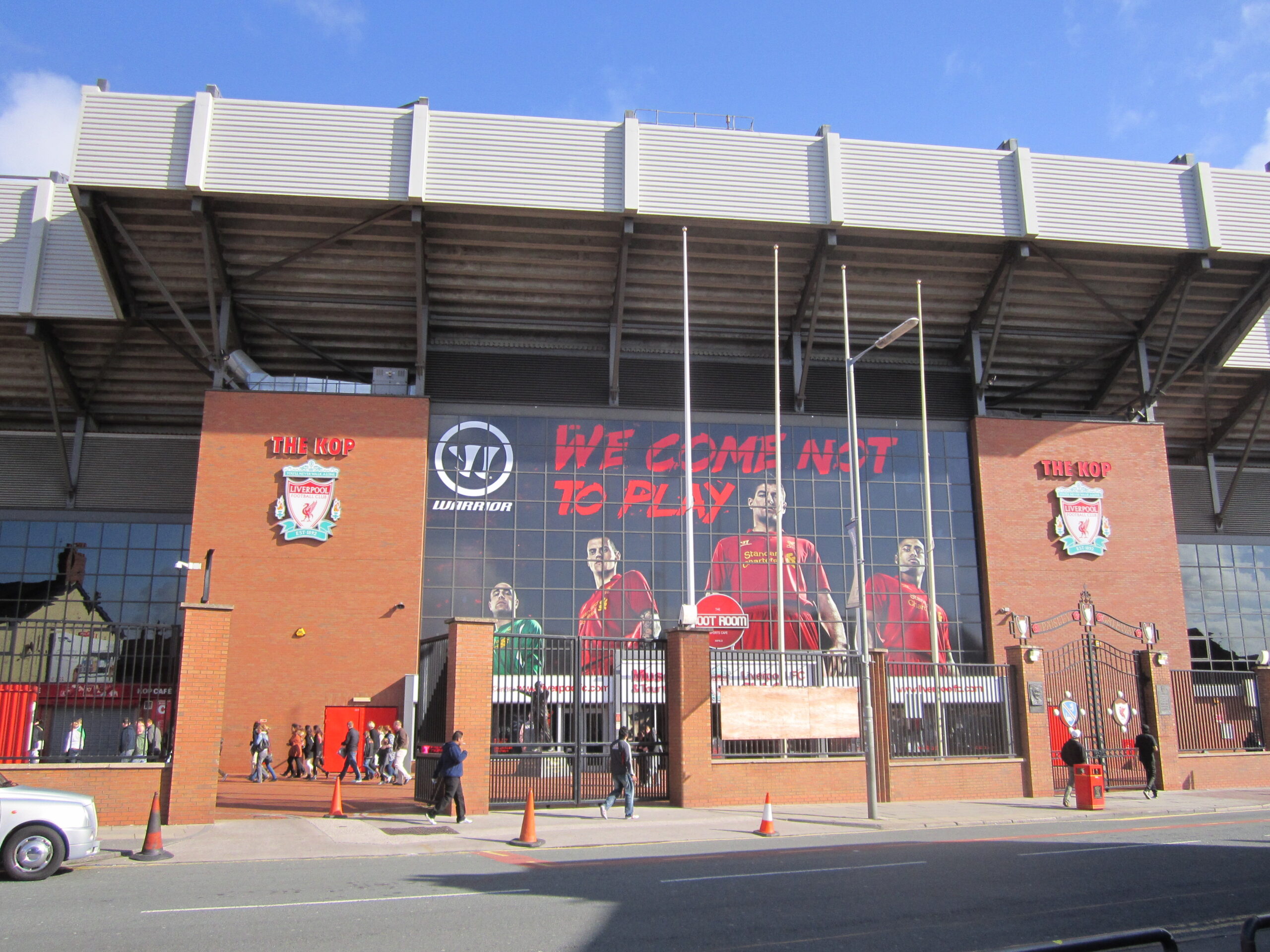
Anfield stadium guide — everything you need to know
Anfield Stadium is one of the most iconic stadiums in world football, home to Liverpool FC since 1892. With a capacity of 61,276 seats following the expansion of the Anfield Road Stand completed in January 2024, Anfield is the fourth-largest in the Premier League — after Manchester United's Old Trafford (74,310 seats), Stadium Tottenham Hotspur (62,850 seats), and Wembley National Stadium (90,000 seats). If you're planning to see Liverpool play in the Premier League, the Champions League, or any other competition — this is your comprehensive, detailed guide to the perfect Anfield experience.
Basic facts — Anfield by the numbers
- Full name: Anfield Stadium
- Current capacity: 61,276 seats (fourth-largest in the Premier League)
- Opened: 1884 (originally as the ground of Everton FC, Liverpool FC has played there since 1892)
- Address: Anfield Road, Liverpool, L4 0TH, England
- Ownership: Liverpool Football Club (Fenway Sports Group — FSG)
- Playing surface: Natural grass with an underground heating system and grow lighting
- Latest expansion: Anfield Road Stand — the project was completed in January 2024, adding about 7,000 new seats
- Historic attendance record: 61,905 spectators (2 February 1952, against Wolverhampton Wanderers, fourth round of the FA Cup)
- Four stands: The Kop, Main Stand, Kenny Dalglish Stand, Anfield Road Stand
Anfield has undergone an impressive architectural transformation in recent years. The first major expansion was of the Main Stand in 2016, a £114 million project that added 8,500 seats and made the main stand the largest of any stand in a Premier League stadium — with 20,500 seats across three impressive tiers. Next came the dramatic expansion of the second stand — the Anfield Road Stand — completed in January 2024 at a cost of about £80 million. This expansion raised the stadium's total capacity to 61,276 seats. The club's future plans include a further expansion of the Kop and the Kenny Dalglish Stand, which could eventually raise the total capacity to about 80,000 seats — which would make Anfield one of the largest stadiums in Europe.
What makes Anfield special isn't just the size — it's the atmosphere. The stadium is considered by many to have the best atmosphere in England, and perhaps in all of Europe. The combination of four stands very close to the pitch, a passionate crowd that never stops singing, and the venue's rich history — creates an experience unlike any other in the world of football.
Stand map — where's the best place to sit at Anfield?
Before buying tickets for Liverpool, it's important to know Anfield's four stands and understand what suits you in terms of experience, view, and budget. Each stand offers a completely different experience.
The Kop — the legendary stand (South)
The Kop is the beating heart of Anfield and one of the most famous stands in world football. It's named after the Battle of Spion Kop from 1900 during the Boer War in South Africa, in which many soldiers from the Liverpool and Lancashire area were killed. The steep hill where the battle took place resembled the steep stand built in 1906 at the south end of the pitch.
This is the stand where the most passionate and loudest fans sit — the singing of "You'll Never Walk Alone" before every home match starts here and spreads in waves across the whole stadium. The Kop holds about 12,390 seats on a single tier — making it one of the largest and most impressive single-tier stands in all of Europe. Even though it's seated, fans in the Kop stand for almost the entire match.
Price range: £50–£75 for regular Premier League matches, £80–£120 and up for the Merseyside derby and big Champions League matches
Suited for: Fans who want the most authentic and passionate experience. Electric atmosphere, standing for most of the match, non-stop singing from the first whistle to the last
Note: Kop tickets are the most sought-after at Anfield — they usually sell out within minutes of going on sale. Almost impossible to get through the club's regular box office. Through TikTik you can find tickets even after the box office is closed
Kenny Dalglish Stand — the central stand (North)
The north stand is located opposite the Main Stand, and is named after Kenny Dalglish — a club legend who won three league titles as a player, won the European Cup in 1978 and again in 1981 and 1984, and later served as manager, leading the team to the double in 1986. The stand has two tiers of seats with an excellent, unobstructed view of the pitch.
Price range: £45–£75 (Lower Centre is the most sought-after and expensive, Upper Tier is cheaper and still has an excellent view)
Suited for: For those who want an excellent, panoramic view of the whole pitch, especially from the lower-center tier. Good atmosphere with easy access to restrooms, concessions, and facilities
Advantage: From a central seat in this stand you see the whole pitch perfectly — ideal for photography and analytical match-watching
Anfield Road Stand — the new, modern stand (East)
The stand that underwent the massive expansion completed in January 2024. It now has two modern tiers with new seats, giant screens, and upgraded service facilities. Excellent view from every seat. The lower right-hand corner is usually where the away team's fans sit (Away Section) — conditions there have also been upgraded following the expansion.
Price range:
- Lower Tier: £35–£55 — close view of the pitch, good atmosphere
- Upper Tier: £30–£50 — high, panoramic view, one of the cheapest options at Anfield
Suited for: For those looking for a reasonable budget with a new, modern view and top-level facilities. Especially recommended for first-time visitors to Anfield who want a comfortable experience
Main Stand — the largest and main stand (West)
The largest stand at Anfield — 20,500 seats across three impressive tiers. Dramatically expanded in 2016 at a cost of £114 million. This is where the premium boxes, the VIP and Hospitality area, the teams' dressing rooms, the press room, and the legendary "This is Anfield" sign that players touch on their way out of the tunnel onto the pitch are located.
Price range: £50–£90 (regular seats in the lower and middle tiers), £200 and up (Hospitality, VIP, and premium packages including food and drink)
Suited for: A premium, luxurious experience, a breathtaking panoramic view from the third tier, access to premium bars and restaurants inside the stand
Tip: The third tier (Upper Tier) offers the most impressive panoramic view in the stadium — you see the whole pitch from above, including the full Kop opposite. A stunning visual experience
How do you get to Anfield from Israel? — all the options
Note this important point: there are no direct flights from Ben Gurion Airport (TLV) to Liverpool. This is a fact that many Israelis planning a trip to Anfield aren't aware of. Liverpool's airport — John Lennon Liverpool Airport (code: LPL), named after John Lennon of the Beatles — doesn't receive direct flights from Tel Aviv. So you need to plan your route in stages. Here are the three main options:
Option 1: Fly to London, then train (the most recommended option)
- Flight: TLV → LHR/STN/LTN: Direct flights to London with El Al (Heathrow), Wizz Air (Luton), or Ryanair (Stansted). Flight duration: 4.5–5 hours
- Train London Euston → Liverpool Lime Street: Just 2 hours and 10 minutes with Avanti West Coast. Trains leave every 20–30 minutes during peak hours
- Train cost: £30–£80 depending on booking time (earlier = cheaper). Book through Trainline.com or directly with Avanti West Coast
- Total travel time from Ben Gurion Airport to Liverpool: About 8–9 hours including the flight, transfer between the airport and Euston station, and the train ride
- Why this is the best option: Frequent, comfortable, fast trains, and you can work/rest along the way. Liverpool Lime Street station is right in the heart of the city center
Option 2: Fly to London, then a cheap domestic flight
- Flight: TLV → London Stansted/Luton: Same as Option 1
- Domestic flight London → Liverpool (LPL): Ryanair or easyJet from London Stansted or Luton, flight duration only about 55 minutes
- Cost: £15–£50 if booked early (Ryanair can even be £9.99 on sale)
- Significant advantage: Saves two hours of train travel, and if you're already landing at Stansted it's very convenient
- Disadvantage: Liverpool's John Lennon Airport is about 12 km from the center — you'll need a shuttle/bus (30 minutes, Arriva Bus 500) or a taxi (£15–£20)
Option 3: Direct flight to Manchester, then a short train ride
- Flight: TLV → MAN (Manchester): Direct flights with El Al (about 5 hours). Manchester is very close to Liverpool
- Train Manchester Piccadilly/Oxford Road → Liverpool Lime Street: Just 45 minutes! Frequent trains with TransPennine Express or Northern
- Train cost: Only £10–£25
- Big advantage: The shortest and simplest way if there's a direct flight to Manchester on your date. You can also combine a visit to Old Trafford or the Etihad
- Tip: If you're planning to see both a Liverpool match and a Manchester match — this is the ideal way, since the two cities are just 45 minutes apart by train
From Liverpool Lime Street station to Anfield Stadium — arriving on matchday
Arrived at Liverpool Lime Street? Great. Now you need to get to Anfield Stadium, which is about 3.5 kilometers northeast of Liverpool's city center. Here are all the options:
- Soccerbus — the recommended way on matchday: A dedicated bus operated by Arriva in partnership with Liverpool FC, leaving from Sandhills Station straight to Anfield. Cost: just £2 one way. The bus leaves every few minutes before and after the match. It's recommended to buy a Merseyrail Matchday ticket, which covers both the train and the Soccerbus
- Merseyrail train: From Lime Street station to Sandhills Station — just 3 minutes. From Sandhills you take the Soccerbus, or walk about 15 minutes via Walton Breck Road straight to the stadium
- Regular buses: Lines 14, 17, 19, and 26 from Queen Square Bus Station (right next to Lime Street station). Reach Anfield Road within 20–30 minutes depending on traffic
- Taxi: £8–£12 from central Liverpool to Anfield, 10–15 minutes with no traffic. On matchday, expect up to 30 minutes due to road closures
- Walking: 45–50 minutes from Lime Street — recommended only on nice, clear days and if you enjoy seeing Liverpool's neighborhoods along the way. The route passes through the Everton neighborhood, and you can see Everton's (historic) Goodison Park ground along the way
Parking: There's no official parking lot at Anfield — it's a stadium located within a dense residential neighborhood. Local residents offer private parking in their yards for £10–£20 per matchday. You can also book parking in advance through the JustPark app. But our strong recommendation: avoid driving to Anfield on matchday. The streets around the stadium are closed to traffic, congestion is very heavy, and leaving after the match can take an hour or more.
Hotels near Anfield — where to sleep in Liverpool?
Liverpool offers a huge and diverse range of hotels and hostels, from simple budget hostels to luxury boutique hotels. Here are our detailed recommendations by proximity to the stadium and by budget:
Hotels within walking distance of Anfield (up to 15 minutes on foot)
- Hotel Anfield: A modern boutique hotel on Breck Road, about a 10-minute walk from the stadium. Built in 2019 as part of the Anfield area's urban renewal project. Clean, well-designed rooms, friendly staff. Prices: £75–£130 per night on regular days, up to £180 on big matchdays
- Cabbage Hall: A guesthouse/B&B (Bed and Breakfast) right on Anfield Road — just a 5-minute walk from the stadium! An excellent budget option with breakfast included. Prices: £25–£38 per night. Great for those who want to be as close as possible
- Frames: Another budget hostel in the Anfield area, suited to those looking for the lowest price with a convenient location. Prices: £20–£35 per night. Basic but clean conditions
Hotels in central Liverpool (recommended for the full city experience)
- Titanic Hotel: A 4-star hotel at Stanley Dock — in the historic, restored Northern Docks area. Prices: £100–£180 per night. Impressive industrial architecture, also relatively close to Anfield
- 30 James Street: A unique boutique hotel in the historic building of the White Star Line — the same company that sent the Titanic. Prices: £90–£160 per night. Central location, rooftop bar with a stunning view
- Hard Days Night Hotel: A Beatles-themed hotel on Mathew Street, next to the famous Cavern Club. Prices: £80–£150 per night. A must for Beatles fans
- Premier Inn Liverpool City Centre: A reliable, budget-friendly British chain with comfortable, clean rooms. Prices: £50–£90 per night. Central location with convenient access to transport
Important tip for Israelis: On a big matchday, hotels around Anfield and in central Liverpool fill up very fast and prices rise. Book one to two months in advance for regular Premier League matches. If you're coming for the Merseyside derby (against Everton), a big Champions League match, or a match against Manchester United — book at least 3 months in advance.
Food and drink — what to eat at Anfield and nearby?
One of the things that makes the matchday experience at Anfield exceptional is the wealth of food options. Liverpool is known for its rich and diverse food culture, and the Anfield area — which is undergoing significant urban renewal — offers options you won't find at other stadiums.
Homebaked Bakery — Anfield's legendary bakery
Homebaked is a real institution and one of the symbols of the Anfield area. Located at 197 Oakfield Road, right across from the stadium gate, this is a unique community bakery run as a cooperative by the neighborhood's residents. The bakery was founded as a community project and became a symbol of the Anfield area's renewal. You must try the following dishes:
- Scouse Pie: The most famous pie — filled with Liverpool's traditional Scouse stew. It consists of tender chunks of beef, potatoes, carrots, and onion in a rich, seasoned gravy. Scouse is Liverpool's national dish — and it's why Liverpool residents are nicknamed "Scousers"
- Shankly Pie: An indulgent meat and potato pie, named after Bill Shankly — the legendary manager who turned Liverpool from a Second Division team into champions of England and Europe
- Chicken and mushroom pie: A homey British classic, perfect for a cold, rainy day
- Prices: £3–£5 per pie — incredibly cheap for food near a stadium
- Open on matchday: Yes, but it's highly recommended to arrive early — the lines are long and popular pies sell out before the stadium gates open
Georgie Porgy Cafe
A warm, homey café on Anfield Road, very popular with local fans and tourists before the match. Offers a Full English Breakfast (eggs, sausages, bacon, beans, toast, and grilled tomato), fresh sandwiches, homey hot dishes, and tea and coffee. Especially friendly prices: £5–£10 for a full, filling meal.
Food inside Anfield Stadium
- Food stalls in the concourse: Burgers, hot dogs, fries, pies, pizza. Prices are higher than outside — £5–£8 per item — as expected at a stadium
- Beer: Carlsberg — Liverpool's historic sponsor — priced at £5–£6 per cup. Important to know: Beer is sold only in the concourse beneath the stands. Under British law it's forbidden to bring beer or any other alcoholic drink into the stand itself and drink it while watching the match
- Halal food: Yes! There are dedicated halal food stalls inside the stadium — usually located in the concourse of the Kop and the Anfield Road Stand. Liverpool is a city with a large, active Muslim community, and the club is committed to accessibility and dietary variety
- Kosher food: Unfortunately, there's no kosher food inside the stadium. Even in Liverpool itself, kosher food options are very limited — Liverpool's Jewish community is relatively small. There's a shop called Greenbank Deli that sells some kosher products. Our recommendation: pack kosher food from home, or buy it in London or Manchester, where there are large Jewish communities with many kosher restaurants and grocery stores
Pubs and restaurants near the stadium — the matchday experience
- The Albert (Walton Breck Road): The classic and most famous pub among Liverpool fans. Electric, wild atmosphere before and after every match. Excellent local beers, good pub food (fish and chips, burgers), group singing. Recommended to arrive two hours before kickoff
- The Sandon: "The birthplace of Liverpool FC" — here, in 1892, at a historic meeting in the back room of the pub, it was decided to found Liverpool FC following the split from Everton. A historic and moving pub with excellent food and beers
- The Park Pub: A quieter, more pleasant pub, suited to families and those who prefer a relaxed atmosphere. Reasonable prices
- Arkles (Anfield Road): Right on Anfield Road, extremely popular on matchday. Fans from all over the world meet there
Important practical tips for Israelis coming to Anfield
UK entry authorization — UK ETA (mandatory from 2025!)
Starting in 2025, every Israeli citizen arriving in the UK must have an ETA — Electronic Travel Authorization. This is not a full visa, but a simple electronic authorization that costs just £10 and is valid for two years (multiple entries). You must apply through the official UK ETA app (available on iPhone and Android) at least 72 hours before your flight. Without an approved ETA you will not be allowed to board your flight to the UK. This applies to all types of visits of up to 6 months.
Currency, language, and general information about the UK
- Currency: Pound sterling (GBP, £). Don't bring euros — the UK left the European Union (Brexit) in 2020 and has never used the euro. Almost everywhere in Liverpool and at Anfield accepts payment by credit card or Contactless. Apple Pay or Google Pay is recommended
- Language: English — but be prepared for the Scouse accent of Liverpool residents, which is very distinctive and can surprise even fluent English speakers. Don't be shy about asking them to repeat what they said — they're used to it and will answer with a smile
- Electricity: British Type G plug (3 square pins) — different from all of Europe! Bring an adapter. You can also buy one at any supermarket in Liverpool for a few pounds
- Weather: Liverpool is known as a rainy, windy city. Even in the summer months (June–August) bring a light raincoat and layers of clothing. Average temperatures: 3–8 degrees Celsius in winter, 14–20 degrees in summer. Sea wind is strongly felt
- Safety: Liverpool is generally safe, especially in the city center and tourist areas. Anfield is in a neighborhood that used to be neglected but is undergoing significant urban renewal. On matchday there's a very heavy police presence around the stadium. After the match at night — return with the flow of the crowd to public transport, not alone on dark streets
- Contactless payment: Almost everywhere in Liverpool and inside the stadium accepts Contactless. Highly recommended — less need for cash
Important tips for matchday at Anfield
- Arrive early: The stadium gates open 90 minutes before kickoff. It's highly recommended to arrive at least an hour before kickoff to soak up the unique atmosphere, hear the songs, and find your seats comfortably
- "You'll Never Walk Alone": About 15 minutes before kickoff, the entire crowd — 61,000 fans — sings the anthem together. If you're sitting in the Kop, it's a stunning, unforgettable experience. Learn the words in advance! They're simple and beautiful
- "This is Anfield" sign: The iconic sign that players touch is located in the players' tunnel and isn't accessible to regular spectators. But on the guided stadium tour (outside matchday) — you can touch the sign and take a photo!
- Dress code: Don't wear a rival team's shirt in the Anfield area — especially not Everton's or Manchester United's. There's no physical danger, but you'll get looks and comments. A red Liverpool shirt or neutral clothing is preferable
- Bag policy: Large bags are not allowed into the stadium. Only a small bag, A4-size or smaller, is permitted (not a large backpack). Leave bags at the hotel. Check the updated policy on Liverpool FC's official website before your trip
- Rain protection: Anfield is not a closed stadium — most seats are covered, but if heavy rain falls with wind (a common occurrence in Liverpool) you can get wet, especially in the lower rows. Bring a light raincoat
Anfield's history — why this is the most special place in world football
The Kop — more than a stand, a cultural phenomenon
Anfield's Kop isn't just steps with seats — it's a cultural phenomenon that has influenced all of world football. It's named after the Battle of Spion Kop (January 1900) during the Boer War in South Africa, in which hundreds of soldiers from the Lancashire regiment were killed — many of them from the Liverpool area. The steep, mountain-like hill where the deadly battle took place resembled the steep stand built in 1906.
In the 1960s and 1970s of the 20th century, the Kop held up to 28,000 standing fans packed together in astonishing density — a kind of roaring, surging red sea that terrified every visiting team that came to Anfield. The atmosphere was legendary — singing, shouting, humor, and complete madness. In 1994, following the Taylor Report published after the terrible Hillsborough disaster (1989, 97 Liverpool fans killed), the Kop was converted from a standing stand to an all-seater stand, and its capacity dropped to 12,390. But the atmosphere, the singing, and the spirit — remained exactly the same.
"You'll Never Walk Alone" — the anthem that stuns the world
The song, originally written in 1945 for Rodgers and Hammerstein's musical "Carousel", became Liverpool FC's unofficial anthem in the 1960s, when fans in the Kop adopted the 1963 cover version by Gerry and the Pacemakers. Since then, "You'll Never Walk Alone" is sung with immense emotion before every home match at Anfield — the initials YNWA are engraved on the red Shankly Gate above the stadium's main entrance.
The moment when 61,000 people raise red scarves and sing together "Walk on, walk on, with hope in your hearts, and you'll never walk alone" — it's one of the most powerful, moving, and spine-tingling moments in all of world sport. Rival players, rival managers, and journalists from around the world admit that it changes the game and that there's nothing like it in any other stadium.
"This is Anfield" sign — the metal plaque that terrifies champions
Bill Shankly, Liverpool's legendary manager (1959–1974), put up a metal sign reading "This is Anfield" at the entrance from the tunnel to the pitch in the early 1970s — to remind visiting teams where they had arrived and to intimidate them. Tradition says Liverpool players touch the sign on their way out to the pitch for good luck and encouragement. Different managers throughout history have treated the sign in different and surprising ways — Jürgen Klopp, when he arrived at Liverpool in 2015 as the new manager, announced that the players didn't yet deserve to touch the sign because they hadn't proven themselves. Only after the team started winning and succeeding did the players "get permission" from Klopp to touch the sign.
Liverpool 4–0 Barcelona (2019) — "the Miracle of Anfield"
7 May 2019, Champions League semifinal, second leg. Liverpool lost 0-3 in the first leg at Barcelona's Camp Nou. Without Mohamed Salah and without Roberto Firmino — the two big stars who were injured. Facing Liverpool was Barcelona with Leo Messi, Luis Suárez, and Jordi Alba — one of the best teams in the world. No expert, no bettor, no one in the world gave Liverpool a real chance of coming back from a three-goal deficit.
What happened at Anfield that legendary night became one of the greatest and most moving moments in the entire history of world football: Liverpool won 4-0 (4-3 on aggregate in Liverpool's favor). Divock Origi, who only made the starting lineup because of injuries, scored twice. Georginio Wijnaldum came off the bench at halftime and scored two goals within just two minutes — and Trent Alexander-Arnold executed the legendary quick corner, catching all of Barcelona unprepared, and Origi sealed the win with the fourth goal.
Anfield shook that night. 54,000 fans (the capacity before the expansion) screamed, cried, and celebrated like never before. Barcelona coach Ernesto Valverde said after the match: "That crowd… they're another player on the pitch. Anfield on a European night is something else entirely. They turned the impossible into the possible." Liverpool went on to win the Champions League that same season — their sixth title.
What the greatest managers have said about Anfield
- José Mourinho: "Anfield. The stadium itself already says it all. When you walk from the hotel to the stadium and see the people in the streets, you feel football in the air. You smell the history. It's a special place, a place you can't forget."
- Pep Guardiola: "Anfield is the hardest place to play in England, and maybe in all of Europe. The atmosphere, the pressure, the noise — it changes games. On a regular day they're a very good team. At Anfield on a European night, they're almost unbeatable."
- Zinedine Zidane: "I've seen a lot of big stadiums in my career — Santiago Bernabéu, San Siro, Camp Nou. But Anfield is something else. When they sing You'll Never Walk Alone — it goes right through you to the bone."
- Bill Shankly (Liverpool manager 1959–1974): "Some people think football is a matter of life and death. I'm very disappointed with that attitude. I can assure them it is much more important than that."
Anfield Stadium tour — Anfield Stadium Tour & Museum
Even if you didn't manage to get a ticket for a match, or you're in Liverpool on a day with no match — the guided stadium tour is worth every moment. It's an exciting and fascinating experience even for those who aren't Liverpool fans.
- Tour duration: About 60 minutes of a guided tour with a professional guide
- What the tour includes: Both teams' dressing rooms, the players' tunnel, the "This is Anfield" sign (you can touch it and take a photo!), the managers' bench, the technical dugout, the press area, the trophy room, and a walk along the edge of the pitch
- Museum — The LFC Story: An interactive museum with all the club's trophies (including 6 Champions League cups!), historic shirts, moving films, and a moving, respectful exhibit about the Hillsborough disaster
- Cost: £25 for adults, £15 for children (ages 6–15), free under age 6
- Booking: Through liverpoolfc.com/visit — recommended to book in advance, as tours fill up fast, especially on holidays and weekends
- Club store: Liverpool FC's large store (LFC Megastore) near the main entrance. Souvenirs, club shirts in every size, scarves, balls, and more. Also open on days without a match
Anfield and the L4 area — what else is there to do nearby?
The Anfield and L4 area is undergoing an exciting process of urban renewal. In addition to visiting the stadium, here are a few things you can do in the area:
- Anfield Cemetery: The historic cemetery that borders the stadium. A quiet, beautiful place with ancient trees — an interesting contrast to the matchday madness
- Stanley Park: The beautiful park located between Anfield and Everton's Goodison Park ground. Perfect for a walk before or after a stadium tour
- Hillsborough Memorial: The memorial for the 97 victims of the Hillsborough disaster (1989) is located at the stadium entrance near the Shankly Gate. A moving, respectful place
- Bill Shankly statue: The bronze statue of the legendary manager stands facing the main entrance with arms outstretched. One of the most popular photo spots at Anfield
Frequently asked questions — Anfield Stadium
How much do tickets cost for a match at Anfield?
Ticket prices for regular Liverpool Premier League matches range from £30 (Upper Anfield Road Stand — the cheapest option) to £75 and up (Kop, Main Stand Centre — the most sought-after). For Champions League matches, the Merseyside derby against Everton, and matches against Manchester United — prices rise to £80–£150 and up. Through TikTik you can get tickets even for matches sold out at the box office — including the Kop and Main Stand.
Can you fly directly from Tel Aviv to Liverpool?
No, there are no direct flights from Ben Gurion Airport to Liverpool. The options are: (1) fly to London and then a 2:10-hour train or a cheap domestic flight, or (2) fly directly to Manchester and then just a 45-minute train ride.
What is Anfield Stadium's current capacity?
Anfield's current capacity is 61,276 seats, following the expansion of the Anfield Road Stand completed in January 2024. This makes Anfield the fourth-largest stadium in the Premier League. Liverpool are planning a further expansion of the Kop that could raise the total capacity to about 80,000 in the future.
Is there halal or kosher food at Anfield Stadium?
Halal food — yes, there are dedicated stalls inside the stadium at several locations. Kosher food — unfortunately not available inside the stadium, and even in Liverpool itself kosher options are very limited. Our recommendation: pack kosher food from home or buy it in London/Manchester before arriving in Liverpool.
What is the Kop and why is it so famous?
The Kop (Spion Kop) is Anfield's southern stand — home to Liverpool FC's most passionate and loudest fans. It's named after a battle from the Boer War in South Africa (1900) in which soldiers from Liverpool were killed. About 12,390 fans sit in one giant tier and create an electric atmosphere unlike anywhere else in the world — non-stop singing, incredible tifos, and energy that directly affects the match and its results.
Do Israelis need a visa for the UK?
Israeli citizens don't need a visa to visit the UK for up to 6 months, but starting in 2025 an ETA (Electronic Travel Authorization) is required — a simple electronic entry authorization costing £10, valid for two years and multiple entries. You must apply through the official UK ETA app at least 72 hours before your flight time.
What's the cheapest way to get from London to Liverpool?
Train with early booking through Trainline.com — you can find tickets starting from £30 from London Euston to Liverpool Lime Street (2 hours and 10 minutes). An even cheaper alternative: intercity bus Megabus or National Express — from just £5–£15, but the ride is long: 4–5 hours.
Book tickets for Liverpool at Anfield — the experience awaits you
Want to experience Anfield for yourself? TikTik offers tickets to every Liverpool FC match — Premier League, UEFA Champions League, FA Cup, Carabao Cup, and the legendary Merseyside derby. All tickets are verified and guaranteed, with secure delivery and Hebrew-speaking customer service.
Anfield isn't just a football stadium — it's a one-of-a-kind experience, a place where history lives and breathes in every corner. The moment when 61,000 people raise red scarves and sing "You'll Never Walk Alone" together, the moment the ball hits the net and the entire Kop explodes with joy — these are moments that will stay with you for life. Whether you're a die-hard Liverpool fan or simply a football lover who wants to see one of the most iconic places in the world of sport — Anfield is waiting for you. You'll Never Walk Alone.
